
Leak Detection & Slab Leak SEO: Rank for High-Margin, High-Trust Searches
Leak detection & slab leak SEO to rank for high-value searches, drive emergency diagnostics, and convert them into high-margin repair work and trusted service leads.

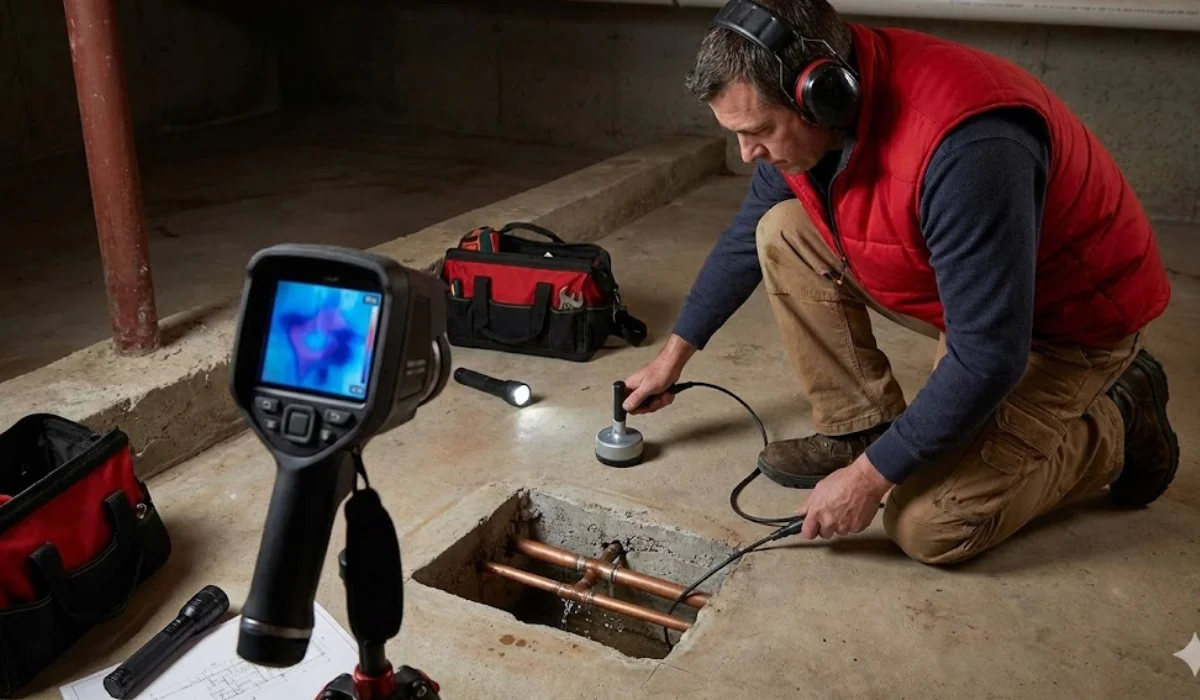
Leak detection SEO is nothing like standard plumbing SEO. Homeowners searching for leak detection or slab leak help aren’t dealing with a simple clog—they’re facing mysterious water damage, rising utility bills, warm floors, mold risk, or structural concerns. That fear changes everything about how they search and who they trust.
Google also treats these keywords differently. “Slab leak repair” is a specialist-level query, which means generic plumbing pages won’t rank. To win these searches, your content must look like it was built by a leak detection expert—showing equipment, diagnostic steps, infrared images, acoustic tools, proof of accuracy, and real job footage.
Leak detection is one of the highest-margin plumbing niches. A single diagnostic can lead to reroutes, repipes, slab repairs, or insurance-covered work. That’s why this SEO strategy focuses on clarity, proof, and expertise—not broad plumbing language.
This guide breaks down exactly how to structure your pages, visuals, Google Business Profile, backlinks, and reviews to rank for leak detection and slab leak terms—and convert those searches into high-value repair jobs.
- Why Is Leak Detection SEO Different From Standard Plumbing SEO?
- What Leak Detection & Slab Leak Keywords Actually Convert?
- What Pages Do You Need to Rank for Leak Detection & Slab Leak Work?
- How Should a Leak Detection Page Be Structured for High-Trust Conversions?
- Why Do Equipment Pages Matter So Much in Leak Detection SEO?
- How Do Slab Leak Pages Rank Differently From Standard Leak Pages?
- How Do You Use Video & Infrared Imagery to Improve Leak SEO?
- How Should You Optimize Google Business Profile for Leak Detection?
- Why Are Reviews Critical for Specialist Services Like Leak Detection?
- What On-Page SEO Elements Matter Most for Leak & Slab Leak Work?
- How Do Backlinks Work for Leak Detection SEO?
- How Should You Handle Pricing Transparency Without Scaring Homeowners?
- What Technical SEO Issues Hurt Leak Detection Rankings?
- How Long Does Leak Detection SEO Take to Produce Results?
- Should Leak Detection SEO Be Done In-House or With a Specialist Agency?
- What Are the Most Dangerous SEO Mistakes in Leak Detection Marketing?
- How Does Leak Detection SEO Feed the Rest of Your Plumbing Business?
- Frequently Asked Questions About Leak Detection & Slab Leak SEO
Why Is Leak Detection SEO Different From Standard Plumbing SEO?
Leak detection SEO requires proof, precision, and specialized terminology—far beyond what Google expects from a general plumbing page. Homeowners searching for leak detection or slab leak help are anxious, and Google elevates providers that demonstrate expertise, not just availability.
Leak detection is a high-skill service, and Google treats it as such. Standard plumbing SEO focuses on speed (“same-day plumber”), but leak detection SEO focuses on accuracy, technology, and diagnostic capability. When someone searches “slab leak repair,” Google expects:
- Specialized equipment
- Clear diagnostic steps
- Symptoms explained in simple language
- Visual evidence (infrared, acoustic detection, moisture readings)
Generic plumbing content won’t rank for these intent-heavy queries.
Another major difference is trust level. A misdiagnosed slab leak can cost thousands. Homeowners need reassurance that you’re not guessing—you’re using professional tools and validated methods.
Leak detection SEO must reflect that by showing:
- Acoustic listening devices
- Infrared cameras
- Moisture mapping
- Pipe tracing tools
- Actual job photos
Finally, leak detection searches are more symptom-based. People don’t type “call plumber”—they type:
- “warm spots on floor”
- “water leak under house”
- “mysterious water bill spike”
SEO must match these real-world symptoms to capture demand.
Leak detection rankings go to the company that demonstrates expertise, not just availability—and your SEO must look like it came from a specialist, not a generalist.
What Leak Detection & Slab Leak Keywords Actually Convert?
The leak detection keywords that convert best are those tied to diagnostics, accuracy, and high-risk symptoms. These searches come from homeowners already experiencing water damage, unexplained moisture, warm floors, or rising utility bills—signals of urgent, high-value intent.
Leak detection is a specialist service, so generic plumbing keywords won’t bring qualified leads. Instead, focus on specific problem-driven searches such as:
Core Leak Detection Keywords
These indicate the homeowner wants a professional diagnosis, not a handyman:
- “leak detection [city]”
- “water leak detection near me”
- “hidden water leak detection”
High-Ticket Slab Leak Keywords
These searches come from homeowners facing serious structural risk:
- “slab leak repair [city]”
- “slab leak detection”
- “water leak under slab”
- “warm floor slab leak”
These keywords convert into $2,000–$15,000 repair or reroute jobs.
Technology-Based Keywords
The searcher wants precision and specialist equipment:
- “electronic leak detection”
- “infrared leak detection”
- “acoustic leak detection”
- “thermal imaging leak detection”
These keywords filter out low-intent shoppers and attract high-trust buyers.
Symptom-Based Keywords (Often the Highest Intent)
Homeowners experiencing a problem but unsure of the cause:
- “water bill suddenly high”
- “water leak under house”
- “wet carpet no visible leak”
- “moisture in walls”
- “water coming through foundation”
These rank easily because competitors rarely build content around symptoms.
Leak detection SEO succeeds when your content mirrors how real homeowners search: specific problem → diagnostic solution → specialist repair.

What Pages Do You Need to Rank for Leak Detection & Slab Leak Work?
You need a cluster of specialist pages, not one generic leak page. Leak detection and slab leak searches require depth, visuals, and clear diagnostic explanations. Without multiple supporting pages, Google won’t view you as a true specialist—and you won’t rank for the high-ticket terms.
A proper leak detection SEO structure starts with your core Leak Detection page, which positions you as the expert and explains your diagnostic process. This is where homeowners first land when they suspect a hidden leak. It must include symptoms, equipment, and a clear next step.
Next is the Slab Leak Repair page, which deserves its own dedicated content because slab leaks involve structural risk, higher pricing, and more technical detail. Google treats slab leak searches differently, and mixing them with general leak detection weakens rankings for both.
You also need an Equipment & Technology page, which isn’t optional in this niche. Leak detection SEO depends on demonstrating the tools you use—acoustic listening devices, infrared cameras, moisture meters, tracing equipment. Showing equipment builds massive trust and improves engagement.
A Signs and Symptoms page helps you rank for the real-world searches homeowners type when they don’t yet know the cause: warm floors, wet carpet, unexplained moisture, or sudden water bill spikes. These keywords convert extremely well, and competitors rarely target them correctly.
Finally, an Insurance & Claims Assistance page positions you as a guide in situations where damage is already happening. Many leak and slab leak repairs involve insurance, and addressing this upfront increases conversions and reduces hesitation.
When all these pages exist together, Google sees a complete topical footprint—strong enough to rank for complex, high-value diagnostic searches.

How Should a Leak Detection Page Be Structured for High-Trust Conversions?
A leak detection page must build trust within the first few seconds. Homeowners searching for hidden leaks or slab leaks are already stressed—they’re dealing with moisture damage, warm floors, mold risk, or rising utility bills. Your page must immediately reassure them that you use professional tools and proven diagnostic methods.
Start with a clear, calming headline that addresses their fear—something like “Accurate Electronic Leak Detection in [City]—Find the Source Before Damage Spreads.” This instantly frames you as a specialist, not a general plumber.
Next, present the symptoms homeowners might be experiencing. People often search without knowing the cause, so listing symptoms helps them self-diagnose and builds relevance. Mention warm flooring, unexplained moisture, running water sounds, and sudden water bill spikes.
Your diagnostic process should be the centerpiece. Homeowners want to know how you find leaks, not just that you can. Break down the steps in simple terms:
- Acoustic listening
- Infrared thermal imaging
- Moisture mapping
- Pipe tracing
Use photos or short clips here—visuals increase trust dramatically.
After explaining your process, show equipment proof. Leak detection is a credibility-driven service, and displaying your devices (thermal cameras, listening tools) is one of the strongest conversion levers in this niche.
Finally, include reassurance about speed, accuracy, and next steps—whether that’s repair, reroute, or working with insurance. The goal is to make the customer feel they’ve found someone who can diagnose the issue without guesswork.
A leak detection page succeeds when it reduces fear, shows expertise, and proves accuracy—all before the homeowner scrolls too far.
Why Do Equipment Pages Matter So Much in Leak Detection SEO?
Equipment pages matter because leak detection is a proof-driven service. Homeowners need to know you can find the source of a leak without cutting open walls or slabs unnecessarily. Google also prioritizes websites that demonstrate real expertise—showing your diagnostic tools is one of the strongest signals you can send.
Leak detection relies on precision, and your equipment page should communicate that you don’t guess—you measure, locate, confirm, and document. When a homeowner sees the tools you use, the fear of misdiagnosis drops instantly. This increases conversions more than any sales copy could.
Your equipment page should highlight the core technologies that define modern leak detection:
- Acoustic listening devices to detect leaks behind walls and under slabs
- Infrared thermal cameras to identify heat patterns from hot-water slab leaks
- Moisture meters to confirm hidden moisture and map affected areas
- Pipe tracing equipment to locate water lines without destructive searching
Each tool should include simple explanations and real photos—not stock images.
This page also boosts SEO because competitors rarely include one. Google sees equipment pages as high-authority content, which helps you rank for terms like:
- “electronic leak detection”
- “slab leak detection”
- “thermal leak detection”
Finally, equipment pages increase dwell time. Visitors naturally explore visuals, compare tools, and read explanations. Longer engagement signals relevance, giving you a ranking advantage.
A well-built equipment page is not optional in leak detection SEO—it’s one of the clearest ways to separate your business from general plumbers and appear as the specialist homeowners want.
How Do Slab Leak Pages Rank Differently From Standard Leak Pages?
Slab leak pages require more proof, more visuals, and more depth than standard leak detection pages because Google treats slab leaks as high-risk, high-cost searches. Homeowners dealing with warm floors, foundation leaks, or water under concrete want a specialist—not a general plumber.
A slab leak page must demonstrate a higher level of expertise. While general leak pages focus on symptoms and diagnostic tools, slab leak pages must address structural concerns, repair options, reroutes, and the risks of delaying treatment. This is why slab leak queries tend to convert into higher-value jobs but also require stronger trust signals.
Slab leak SEO depends heavily on visual evidence. Infrared images, moisture readings, and jobsite photos help both Google and homeowners understand that you deal with these complex issues regularly. Competitors rarely provide visuals, so even a few real images can give you a ranking edge.
Your slab leak page should explain:
- Why slab leaks form
- The difference between hot-water and cold-water slab leaks
- How diagnostics differ under concrete
- Repair options (spot repair vs. reroute vs. repipe)
These details matter because Google expects this level of depth for specialist queries.
Another key difference is intent strength. Someone searching “leak detection” may still be browsing. Someone searching “slab leak repair” is often facing thousands in potential damage. That urgency boosts conversions when your page clearly outlines:
- Timeline expectations
- Safety considerations
- Insurance relevance
In short: leak detection SEO builds trust, but slab leak SEO demands mastery.
Your page must look like it was built by someone who diagnoses and repairs slab leaks daily.
How Do You Use Video & Infrared Imagery to Improve Leak SEO?
Video and infrared imagery dramatically improve leak detection SEO because they increase trust, boost engagement, and prove you use real diagnostic technology. Google rewards pages where users stay longer—and nothing holds attention better than visual proof of how leaks are found.
Infrared images instantly communicate expertise. A homeowner may not understand acoustic detection, but they absolutely understand a heat signature showing the exact location of a hot-water slab leak. These visuals reduce fear and eliminate skepticism about misdiagnosis.
Short videos are even more powerful. A 10–20 second clip showing:
- A thermal camera highlighting a leak path
- A moisture meter confirming hidden saturation
- An acoustic device pinpointing underground pipe noise
- A before/after reroute or spot repair
keeps users on the page longer, signaling high relevance to Google.
Use visuals strategically on your pages:
- At the top of the slab leak page to establish credibility immediately
- In the diagnostic section to explain your process
- Near repair options to show you handle complex work
- On your Google Business Profile for added trust signals
Most competitors use stock photos or text-heavy pages. You stand out the moment you show real jobsite evidence.
Video + IR imagery isn’t just decoration— it’s one of the strongest ranking and conversion tools in the entire leak detection niche.
How Should You Optimize Google Business Profile for Leak Detection?
Optimizing Google Business Profile (GBP) for leak detection means proving you’re a specialist, not a general plumber. Leak-related searches—especially slab leaks—trigger the Map Pack, and Google rewards profiles that show diagnostic capability and real evidence of leak detection work.
Start by choosing the right categories. Most plumbers only select Plumber, which limits visibility for leak-specific searches. Adding categories like Leak Detection Service or Water Damage Detection Service (if available in your region) signals to Google that you handle specialized diagnostics.
Photos are one of the strongest GBP ranking signals in this niche. Upload pictures of:
- Infrared cameras
- Acoustic listening devices
- Moisture meters
- Pipe tracing tools
- Real slab leak diagnostics
- Before/after repair shots
These images help Google understand your expertise and give homeowners immediate confidence.
Reviews should reinforce leak-specific credibility. Encourage customers to mention phrases such as “found hidden leak,” “slab leak diagnosis,” “thermal camera,” or “accurate leak detection.” Google uses this language to match your profile with specialist queries.
GBP posts also help. Even simple updates like “Found a slab leak today using thermal imaging in [Neighborhood]” keep your profile active and relevant.
Finally, make sure your service area and hours support urgent leak calls. A hidden leak feels like an emergency to a homeowner, and clear availability increases both calls and Map Pack placement.
In leak detection SEO, GBP is not optional—it’s your fastest path to ranking for high-trust, high-value searches.
Why Are Reviews Critical for Specialist Services Like Leak Detection?
Reviews matter more in leak detection than almost any other plumbing niche because homeowners fear misdiagnosis. They want reassurance that you can find the source accurately—without tearing up floors or guessing. Reviews provide the trust Google needs to rank you and the confidence homeowners need to call you.
Leak detection is a high-stakes service. A wrong diagnosis can lead to unnecessary demolition, mold growth, or thousands in additional damage. That’s why reviews containing specific language about the diagnostic process are extremely powerful. They signal expertise, precision, and honesty.
Your best-performing reviews usually mention:
- How quickly you located the leak
- The equipment used (“thermal camera,” “acoustic device”)
- Accuracy of diagnosis
- Minimally invasive approach
- Relief after confirming the exact problem
- Successful slab leak reroutes or repairs
These keywords aren’t just persuasive—they directly improve SEO. Google analyzes review language to categorize your business. If reviews contain terms like slab leak, hidden leak, thermal imaging, or leak detection, you gain relevance for specialist queries.
Visual reviews matter too. When customers upload photos or videos showing moisture mapping or repair results, your profile becomes significantly more credible.
In this niche, reviews aren’t optional—they’re part of the diagnostic proof homeowners look for.
The stronger your review profile, the faster leak detection and slab leak keywords climb in rankings.
What On-Page SEO Elements Matter Most for Leak & Slab Leak Work?
Leak and slab leak pages must focus on clarity, proof, and process. The most important on-page SEO elements are those that help Google understand your expertise and help homeowners trust your diagnosis before they ever call.
Start by outlining a simple, step-by-step diagnostic process. Leak detection is confusing to homeowners, so explaining how you locate leaks without damage is one of the strongest conversion boosters. At the same time, Google uses these steps as topical signals that you are a true specialist.
Next, include a concise explanation of repair options. Slab leaks usually come down to:
- Spot repair
- Reroute
- Full repipe
List these options clearly so the homeowner understands what may happen next. It also shows Google you have complete service coverage for leak-related intent.
Your page must include equipment proof. Showing acoustic tools, infrared cameras, moisture meters, and tracing devices increases both engagement and trust. These visuals are crucial for ranking terms like “electronic leak detection” and “slab leak repair.”
Cost ranges should be addressed lightly. Leak detection searches often involve fear, so soft pricing like “diagnostic-based estimate” or “repairs vary based on location and access” satisfies search intent without overwhelming the homeowner.
Finally, add structured elements such as:
- FAQ schema
- Service schema
- LocalBusiness schema
These strengthen your ability to rank for both local and specialist keywords.
Leak detection SEO succeeds when your page looks like it was built by a technician—not a marketer. The clearer your process, the stronger your rankings.
How Do Backlinks Work for Leak Detection SEO?
Backlinks matter in leak detection SEO because Google needs confirmation that you’re a specialist, not just another plumber. General plumbing backlinks don’t carry enough topical relevance—Google wants to see connections to restoration companies, home inspectors, and other industries that regularly deal with hidden leaks.
Leak detection is a credibility-driven niche, and your backlink profile must reflect that. When Google sees your brand mentioned by companies that diagnose moisture issues, repair water damage, or inspect homes, it reinforces your authority for both leak and slab leak keywords.
The best backlink sources include:
- Restoration companies (water damage + mold remediation)
- Home inspection firms
- HVAC companies (shared diagnostic technology)
- Insurance adjusters or claims assistance sites
- Foundation repair companies
- Pool leak detection specialists (shared terminology + technology)
These links work so well because they mirror real-world referral paths. In actual leak scenarios, these industries interact with each other constantly—Google understands that relationship.
Local backlinks also help, but not all are equal. A chamber of commerce link is fine, but a backlink from a restoration contractor who mentions your leak detection services is worth far more. The more your backlinks align with diagnostics, moisture, and structural repair, the easier it becomes to rank for niche queries.
Avoid mass directory link-building or generic “plumber link lists.” They dilute topical relevance and won’t help you outrank true specialists.
Leak detection backlinks must look like your business actually operates inside a high-trust diagnostic ecosystem—because that’s exactly what Google expects.
How Should You Handle Pricing Transparency Without Scaring Homeowners?
You should present pricing in ranges and tie costs to diagnostic findings, not fixed numbers. Leak and slab leak pricing varies widely, and homeowners are already anxious—your goal is to reassure them, not overwhelm them with exact figures before you’ve even inspected the issue.
Start by explaining that leak detection is a diagnostic-first service. This shifts the conversation away from “How much will it cost?” toward “We locate the problem accurately so you avoid unnecessary damage.” Homeowners respond well when they understand that the upfront diagnostic prevents costly mistakes.
Your pricing section should emphasize:
- A simple diagnostic fee or range
- That every hidden leak is unique
- Repairs are based on location, access, and material
- A proper diagnosis prevents unnecessary demolition
This keeps the conversation grounded and honest.
For slab leaks, provide broad ranges like:
- “Spot repairs typically start at… ”
- “Reroutes depend on pipe path and home layout…”
- “Full repipes vary based on square footage…”
These statements satisfy search intent without anchoring the homeowner to a number that may not apply to their situation.
Avoid listing exact repair costs unless you also include context. Slab leaks can range from $800 to $8,000+, and displaying this without explanation can cause sticker shock.
What matters most is reassurance. Stress that accurate diagnosis minimizes repair costs and ensures the right solution—something homeowners deeply value when dealing with leaks under concrete or inside walls.
Handled correctly, pricing transparency builds trust instead of fear—and increases your conversion rate for high-ticket leak jobs.
What Technical SEO Issues Hurt Leak Detection Rankings?
The biggest technical SEO problems in leak detection revolve around slow media, weak internal linking, and poor content structure. Leak detection and slab leak pages rely heavily on visuals, and if your site loads slowly or Google can’t fully interpret your content, you lose ranking power instantly.
The most common issue is heavy infrared and video files that aren’t optimized. Thermal images, moisture mapping photos, and demo videos are essential for trust—but if they aren’t compressed, they drag your Core Web Vitals scores down. Slow pages cause high bounce rates, which tells Google your content isn’t helpful.
Another major problem is the lack of schema markup. Leak detection requires more structured context than general plumbing because Google needs clarity about your specialized service. Missing schema hurts visibility for rich results and symptom-based searches.
Your internal linking also matters. Many plumbers isolate their leak detection page, but Google ranks specialists based on content clusters. If your site doesn’t link together:
- Leak detection
- Slab leak repair
- Equipment
- Symptoms
- Insurance/help pages
Google won’t see you as authoritative in the niche.
Other technical issues include:
- Thin content around causes and symptoms
- Missing alt text on thermal or diagnostic images
- Mobile designs where images push call buttons too far down
- Duplicate content between leak detection and slab leak pages
The technical goal is simple:
Make your specialist pages fast, structured, and interconnected so Google clearly understands your expertise.
When your technical foundation matches the quality of your diagnostic content, slab leak and leak detection rankings rise quickly.
How Long Does Leak Detection SEO Take to Produce Results?
Leak detection SEO typically shows results in 60–120 days, while slab leak terms may take closer to 90–180 days. These timelines are faster than commercial plumbing SEO but slower than general plumbing because Google needs proof that you’re a specialist, not just a general service provider.
Leak detection pages usually gain traction quickly because the search volume is lower and the competition is poorly structured. Most plumbers don’t create separate pages for slab leaks, equipment, or symptoms—so even modestly strong specialist content can outperform them within a few months.
However, slab leak keywords require deeper trust signals. Google needs to see:
- Real diagnostic photos
- Infrared images
- Equipment descriptions
- A structured diagnostic process
- A dedicated slab leak repair page
- Reviews mentioning leak detection accuracy
These signals take time to earn or produce, which is why slab leak terms have a slightly longer ranking cycle.
Google Business Profile also influences timeline. Adding leak-specific photos and earning reviews that mention “hidden leak,” “slab leak,” or “thermal camera” accelerates Map Pack placement significantly.
Your internal link structure matters too. When your leak detection cluster includes:
- Core page
- Slab leak page
- Equipment page
- Symptoms page
- Insurance assistance page
Google quickly identifies you as a topical authority, shortening the ranking curve.
Leak detection SEO rewards specialists.
The more your content looks like it was created by a diagnostic expert, the faster your rankings and conversions improve.
Should Leak Detection SEO Be Done In-House or With a Specialist Agency?
Leak detection SEO is usually too specialized to manage in-house unless you have someone who deeply understands diagnostics, slab leak terminology, equipment, and symptom-based search behavior. This niche requires far more technical accuracy than general plumbing SEO, and small mistakes can prevent you from ranking for the highest-value keywords.
Unlike standard plumbing pages, leak detection content must explain processes, equipment, moisture behavior, and repair options without overwhelming the homeowner. It’s a delicate balance—too technical and the reader gets confused, too simplified and Google won’t treat you as an expert. Most internal teams struggle to strike this balance.
A specialist agency understands:
- How homeowners describe symptoms before they know the problem
- How to structure content for “diagnostic-first” intent
- How to visually present infrared imaging and acoustic detection
- How to build the correct topical cluster (core → slab → equipment → symptoms → insurance)
- How to write in a calm, reassuring tone appropriate for high-stress searches
Generic marketing agencies often produce residential-style content that fails to meet the trust threshold for slab leak rankings. Even worse, they rarely request diagnostic images or ask for details about your equipment—both of which are essential to ranking.
Leak detection keywords are too valuable to experiment with.
One well-optimized page can generate thousands in recurring revenue from reroutes, repipes, and insurance-related work.
Most companies eventually realize:
Doing leak detection SEO in-house isn’t cheaper—it’s more expensive because the missed opportunities are enormous.
What Are the Most Dangerous SEO Mistakes in Leak Detection Marketing?
The most dangerous mistakes in leak detection marketing come from treating it like standard plumbing SEO. Leak detection—and especially slab leaks—requires specialist credibility. If your content looks generic, Google won’t rank you and homeowners won’t trust you.
The first major mistake is not showing equipment. Leak detection relies on acoustic devices, infrared cameras, moisture meters, and tracing tools. If your pages don’t include real photos of these, Google assumes you’re not a specialist—and you lose ranking power to competitors who display proof.
Another mistake is mixing leak detection with general plumbing pages. When slab leaks, hidden leaks, and diagnostics all live on one generic “Water Leaks” page, Google sees no topical authority. You need distinct pages to rank for each high-value intent.
Many plumbers also use stock photos instead of real jobsite visuals. This destroys trust instantly. Leak detection is a fear-driven niche—homeowners want reassurance you can find the leak without tearing up floors unnecessarily.
Other damaging mistakes include:
- Overexplaining technology in technical jargon
- Creating thin “symptom” sections with no detail
- No infrared or acoustic imagery
- No repair explanation (spot repair vs. reroute vs. repipe)
- Pricing pages with fixed numbers instead of diagnostic-first framing
But the worst mistake is trying to rank without demonstrating precision. Leak detection is all about accuracy. If your pages don’t clearly show how you diagnose leaks, homeowners will assume you guess—and guessing is the #1 fear in this niche.
A specialist service needs specialist SEO.
Anything less leaves you invisible for the highest-value leak searches.
Related: SEO for Drain cleaning business.
How Does Leak Detection SEO Feed the Rest of Your Plumbing Business?
Leak detection SEO feeds your entire plumbing business by opening the door to high-value repairs, repipes, slab leak reroutes, and ongoing plumbing work. A single diagnostic lead often becomes one of the most profitable customer relationships you’ll ever acquire.
Leak detection is a “tip of the iceberg” service. Homeowners search because they see a symptom—moisture, warm floors, damp carpet, high water bills—but the underlying issue usually requires far more than a simple fix. This means the first job often leads to larger projects.
Here’s how a leak detection lead typically expands revenue:
- Hidden leak → pipe repair or re-route
- Slab leak → reroute, spot repair, or full repipe
- Moisture under flooring → restoration partnerships
- High water bill → whole-house inspection
- Older systems → upsells to repipes or replacements
Leak detection also creates strong referral loops. Restoration companies, home inspectors, and real estate agents trust plumbers who diagnose accurately. Once you become their go-to specialist, they consistently send work your way.
Another advantage: leak leads convert at extremely high rates. Unlike generic “plumber near me” searches, these homeowners aren’t shopping—they’re worried and ready to act. When your SEO makes you look like the specialist, you become the immediate choice.
Finally, ranking for leak detection strengthens the entire plumbing site.
Google sees you as a technical authority, which boosts rankings for water heaters, repipes, general plumbing, and even emergency services.
Leak detection SEO is not just a niche service—it’s a high-leverage growth engine for your whole plumbing business.
Frequently Asked Questions About Leak Detection & Slab Leak SEO
Do I need separate pages for leak detection and slab leaks to rank?
Yes. Slab leak intent is completely different from general leak intent. Google only ranks specialists, and separate pages allow you to target high-ticket keywords with deeper content, equipment proof, and repair options.
Does showing infrared and acoustic equipment help SEO?
Absolutely. Equipment photos and videos increase trust, improve dwell time, and give Google stronger topical signals. Leak detection is a diagnostic niche—your tools are part of your ranking power.
How important are symptom-based pages for leak SEO?
Very important. Homeowners often search symptoms like “warm floor” or “water bill high.” These pages capture early-funnel intent and lead to high-converting diagnostic calls.
Can a leak detection page rank without videos or IR images?
It can rank, but it won’t convert nearly as well. Visual proof is one of the strongest signals in this niche, both for Google and homeowners facing hidden leaks.
Do reviews mentioning leak detection help rankings?
Yes. Reviews that include terms like slab leak, thermal camera, or found the leak without damage dramatically improve Map Pack visibility for specialist keywords.
How many supporting pages do I need for strong leak detection SEO?
At minimum: a core Leak Detection page, a Slab Leak Repair page, an Equipment page, a Symptoms page, and an Insurance/Claims page. This cluster signals true expertise to Google.
